Police and Crime Plan 2026/28 Consultation has now closed
Colin Sutton was elected to serve as your Police and Crime Commissioner (PCC) in July 2026.
PCCs are directly elected to be the voice of the people to deliver on the people’s priorities. They are responsible for holding the Chief Constable to account to ensure the priorities are being met – supporting the Constabulary to continue delivering the service people expect and need, but also challenging when required and representing the residents they serve.
One of his primary responsibilities is to publish a Police and Crime Plan. The plan will set out what Norfolk Constabulary’s priorities must be over the duration of his role, in order to keep Norfolk residents safe. As your PCC, Colin now wants to hear from Norfolk residents about what your priorities are for preventing crime and policing effectively, so that these views can guide the Police and Crime Plan.
Please take the time to consider the information in this document and have your say.
The consultation has now closed, as of 5pm Friday 9 October 2026.
A message from the PCC
 I am truly honoured to have been elected by the residents of Norfolk to be your Police and Crime Commissioner. With only 18 months left in office, I have a short time to make a real difference to people’s lives, ensuring that people feel safe in our county and receive the right support should they become a victim of crime.
The conventional approach would be to undertake a formal consultation, over a period of several months, engaging with stakeholders, residents from neighbourhoods and partners before determining priorities for the future.
However, the priorities set out in this draft have not been developed in isolation. They are informed by extensive engagement undertaken over recent months, together with the ongoing consultation, surveys and community feedback regularly gathered by Norfolk Constabulary, my office and our partners. Collectively this evidence provides a clear picture of the issues that matter most to the people of Norfolk and the challenges they expect us to address.
Having carefully considered this feedback, I have identified a proposed set of priorities and an approach for the next 18 months. I am now seeking your views on whether these priorities reflect the needs and expectations of the people of Norfolk and whether there are any significant omissions that should be addressed.
While the overall direction is clear, this consultation remains an important part of the process. I welcome your views and will consider them carefully before publishing the final Plan.
Also, this will not be the last time that you get your chance to raise your issues and concerns. The Plan makes a strong commitment and sets out how I will continue to listen and respond throughout my time in office, which is critical. New issues and concerns are also bound to emerge.
Joint Police and Crime Plan and Police Budget Consultation
As I have to consult on my Police and Crime Plan and next year’s council tax precept at the same time, I have decided to undertake a joint consultation. This will mean that the consultation can reach further and achieve maximum participation by avoiding repetitive and confusing requests for information or for stakeholders to attend more meetings than are necessary. Importantly, this approach also reduces the cost of the consultation and allows participants to consider the information in my Police and Crime Plan, the issues facing policing and the resource requirements at the same time.
When you take part in my survey, I will be able to use your responses to inform the development of my Police and Crime Plan.
This plan will set out the policing objectives for the county for the next 18 months and will demonstrate how I, as your PCC, will work with other key stakeholders and partners to help keep Norfolk safe.
This is your chance to have your say and to make your voice heard about what matters most to you. I’m keen to hear from as many people across Norfolk as possible, so please do take the opportunity to share what you believe should be the priorities for our county and for our police service.
What I am asking
The key question now is whether there is anything that I have missed, or should be included that isn’t being addressed. This survey gives you the opportunity to share your views.
The new Police and Crime Plan for Norfolk will be implemented in November 2026.
Proposed priorities
I therefore propose to prioritise the following three areas in my Police and Crime Plan:
1. Re-engaging with neighbourhoods to rebuild trust in policing
Trust and confidence are fundamental to effective policing. People are more likely to report crime, to cooperate with investigations and to seek help when they have confidence in the police and wider criminal justice system. This is particularly important for victims, many of whom are making difficult and courageous decisions when they come forward. I want people to feel connected to policing within their neighbourhoods and to have confidence that concerns will be listened to and acted upon, and that communication from the Constabulary will be timely and transparent.
2. Preventing violence, abuse and exploitation
Domestic abuse has devastating and long-lasting consequences for victims, families and communities. Responding to domestic abuse, keeping victims safe and prosecuting perpetrators is the biggest area of demand for Norfolk Constabulary. So, reducing incidents of abuse will not only change the lives of victims, but also give our police more resources to tackle other priorities for our neighbourhoods.
I want victims to have confidence that they will be believed, protected and supported at every stage of their journeys. Working alongside safeguarding partners, health services, local authorities and specialist support organisations, we will focus not only on responding to abuse but on preventing it, supporting recovery and holding perpetrators to account.
3. Safer rural communities
In rural areas, victims can often experience a disproportionate impact from crime, whether that’s through the theft of machinery, livestock, fuel or equipment, or through offences that affect their livelihoods, wellbeing or sense of security. They can also have less access to key public services and specialist victims' services, which help them cope and recover. Too often, people living in rural areas feel that their concerns are overlooked. Through closer partnership working with farmers, rural businesses, local authorities and community organisations, I want to ensure that victims of rural crime receive the support, attention and response they deserve.
Policing continues to face significant and growing challenges. The complexity of crime is evolving, vulnerability is rising and demand is increasing, with record numbers of calls to our control room this summer. We are also preparing for significant national police reform, local government reorganisation and devolution.
While the future is evolving, one thing remains unchanged: the communities of Norfolk need an effective, efficient and trusted police service today. We must continue to deliver the services that matter most to our communities, responding quickly when people need us, protecting vulnerable people, investigating crime and bringing offenders to justice. We continuously seek opportunities to improve our service, modernise the approach and better manage resources. This work includes opening a new response base at Loddon after recognising response times in the south of the county were not where they needed to be.
Through our Norfolk Policing Plan, we have set out a clear commitment to focus on what matters most to the public: preventing and reducing crime and harm, investigating crime effectively, supporting victims, safeguarding vulnerable people and maintaining trust and confidence in policing.
Norfolk remains one of the safest counties in the country and I am incredibly proud of the dedication shown every day by our officers, staff and volunteers as they support victims, protect vulnerable people and keep communities safe. We also have one of the highest detection rates in the country.
In recent years, we have repeatedly deployed significant resources to manage large-scale protests and public order incidents. This summer, officers and specialist resources responded to disorder in Thetford. It was the third consecutive summer in which Norfolk officers have dealt with significant protest activity locally or supported colleagues elsewhere in the country. These incidents require specialist skills and substantial resources while maintaining day-to-day policing services.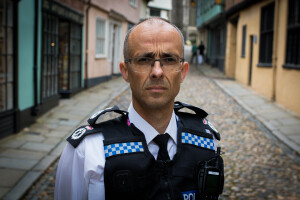
We are also preparing for changes across the criminal justice system. Reforms through the Sentencing Act will result in more offenders being managed within the community and fewer shorter custodial sentences. As the public-facing part of the criminal justice system, policing will play a central role in managing the impact of these changes, creating additional demand and requiring even closer partnership working.
We have a strong track record of using public money responsibly and efficiently. We continually seek opportunities to modernise, embrace technology and improve the way we work while ensuring every pound delivers value for the people of Norfolk. However, for several years, the funding we receive directly from the Government has been insufficient to cover inflationary pressures or keep up with the rate of population growth in the county.
Efficiency savings alone cannot meet the scale of the challenges we face. Most policing expenditure is spent on people, providing the officers, staff and specialist capabilities needed to keep Norfolk safe. Continued investment is essential if we are to maintain frontline services, respond to rising demand and continue delivering exceptional policing for Norfolk.
Your views are important and will help shape the future of policing in our county. I encourage you to take part in this consultation and help inform decisions about the resources needed to keep Norfolk safe in the years ahead.
The consultation has now closed
Thank you to everyone who has contributed to this consultation.
Police and Crime Plan 2026/28 and Police Budget Consultation
Easy Read Police and Crime Plan 2026/28 and Police Budget Consultation
Other formats
Printed version here
If you need the information in this document in an alternative format, please contact the Office of the Police and Crime Commissioner for Norfolk (OPCCN) by telephone on 01953 424455 or by email: opccn@norfolk.police.uk.